Processors
Panoramic uses four main processors on the stereo side field: Width, Density, Character, and Air.
Width
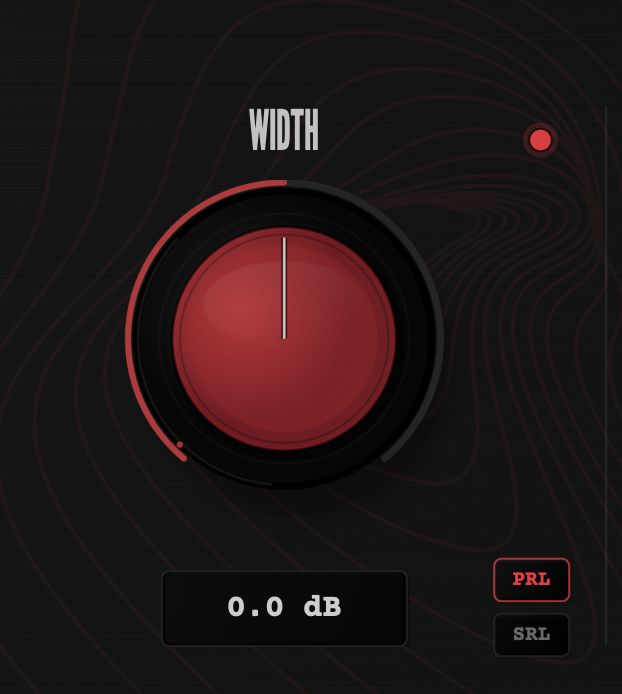
Width adjusts side level by +/-12 dB. In PRL mode, it contributes a width-adjusted side branch alongside Density, Character, and Air. In SRL mode, it scales the summed side path after the module contributions and parallel summing.
The benefit of this is that, in parallel [PRL], you can use it independently of the processing you apply with Density, Character, and Air. In serial [SRL], you can use it to fully control the processed width signal after summing the other three modules.
Density
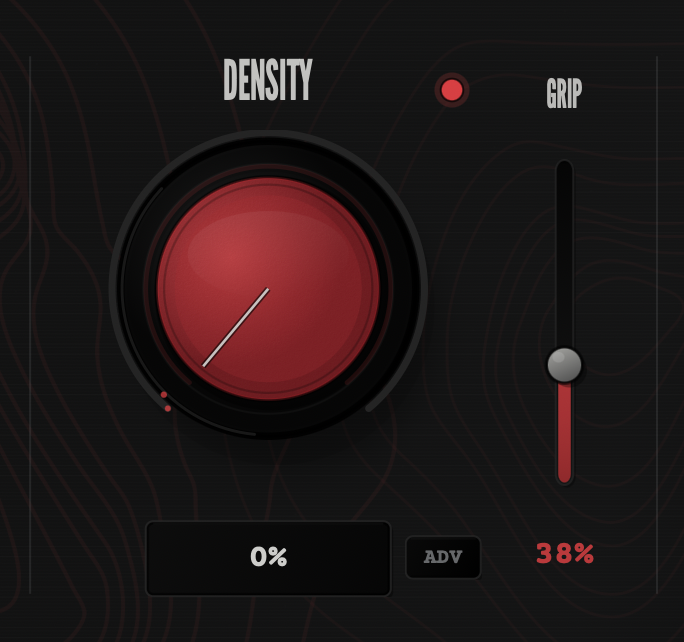
The density module compresses the side signal in parallel, giving you an avenue to bring out low-level information, reverb tails, and textural details from drum overheads, creating consistency in BGV or layers that are otherwise not ever-present in a mix.
The grip slider acts as a threshold; at 38%, it’s equivalent to -18 dBFS.
The advanced menu [ADV] provides sliders to tweak the module’s parameters: Attack (1-20ms), Release (25-120ms), and Ratio (4:1 to 20:1). These parameter boundaries have been tuned to my own mastering sensibilities to produce the best results when using parallel compression on the side signal.

Character
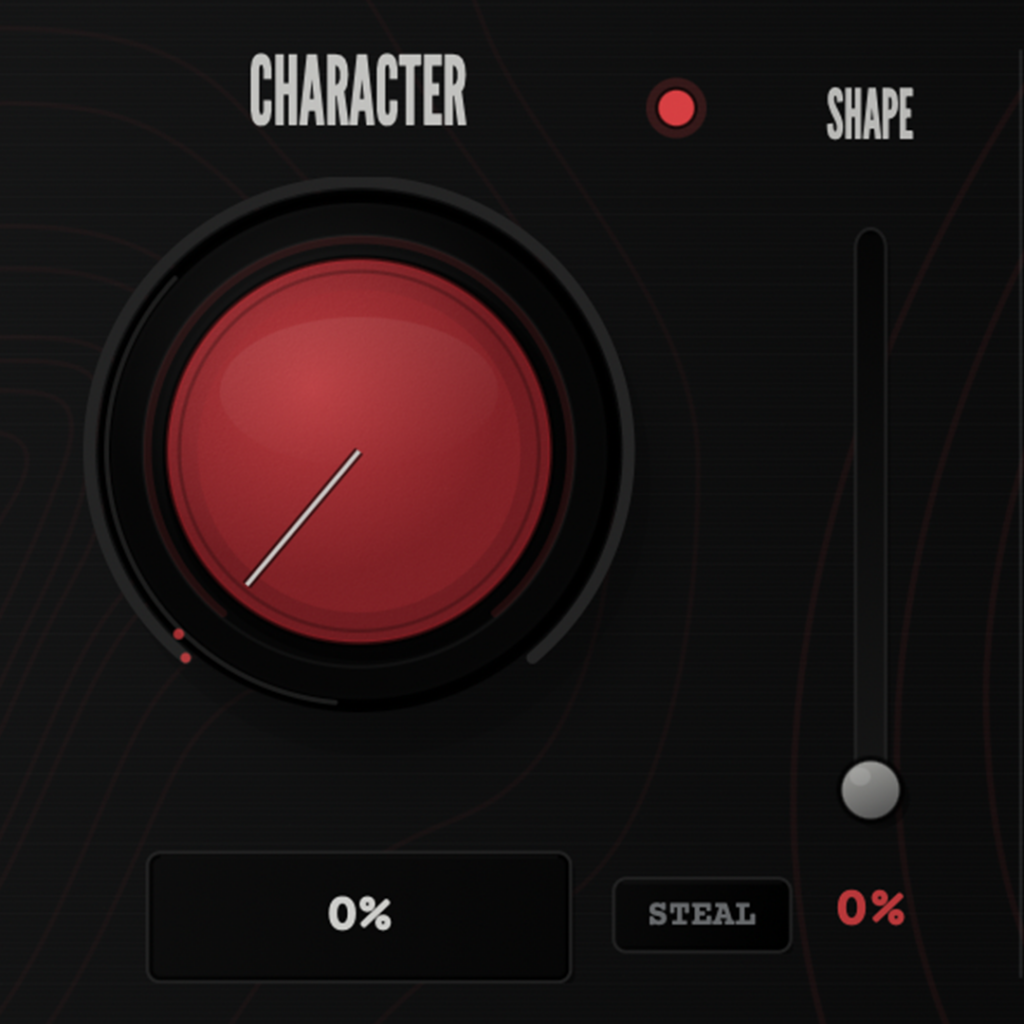
The Character module blends a tanh-based nonlinear side-path delta, with Shape increasing the effective drive for a more forward harmonic texture.
Steal derives a nonlinear harmonic signal from the mid channel, converts it into a quadrature signal, and blends it into the side/character path. The Steal lamp enables or disables only this Steal contribution. These harmonics are decorrelated from the original mid-signal, preventing a shift in the left-right balance at the plugin’s output stage.
The [shape] dictates how many harmonics are generated from this Steal function, and the [blend] dictates how much of these harmonics are put back into the path of the character module. Use the lamp toggle next to blend to turn this feature on and off.

Air
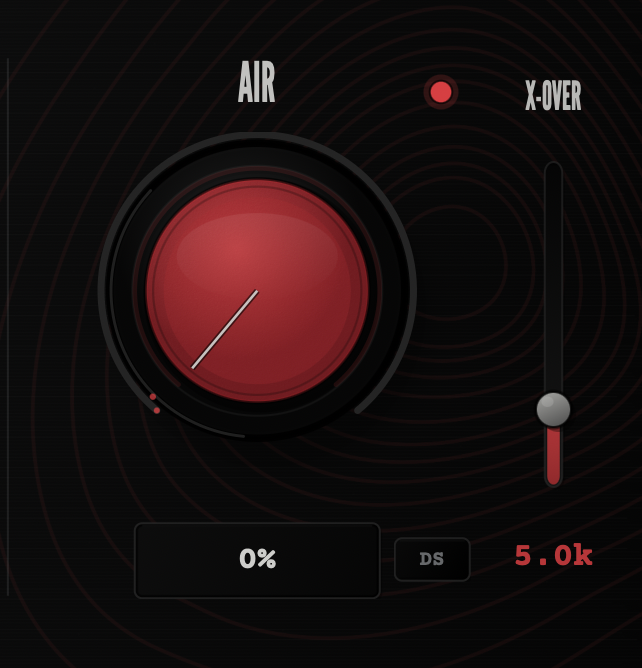
The air module acts as an exciter, producing a saturated, linear-phase high-pass-filtered signal. Set the crossover [x-over] between 3-11kHz and blend accordingly.
Air uses a 129-tap linear-phase FIR high-pass stage that approximates a 2nd-order / 12 dB/oct Butterworth magnitude response before saturation.
Air DS applies high-frequency side de-essing keyed from the Air crossover region, with Threshold, Attack, and Release controls. Use the lamp toggle next to Threshold to turn this feature on and off.
